
XPS — Model: JPS-9030
XPS is a superior technique for analyzing surface areas as well as analyzing chemical bonding state with high energy resolution.
The JPS-9030 can provide high-speed depth profiling and low damage depth profiling with quantitative and chemical bonding state analysis.
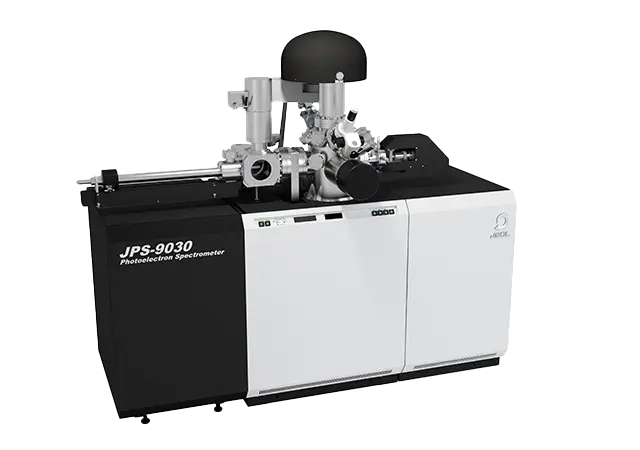
Manufacturer: JEOL — Japan
Overview
The JPS-9030 Photoelectron Spectrometer (XPS/ESCA) adopts a newly designed user interface that realizes easy, immediate operation for anyone. A Kaufman-type etching ion source and an Mg/Al twin anode X-ray source are equipped as standard, and the instrument offers wide-ranging expandability with options such as a high temperature heating system and a gas cluster ion source.
Three strengths define the JPS-9030: wide-area analysis that can be measured in a short time, the SPECSURF software that makes operation easy, and an instrument configuration that enables measurement of a wide range of materials.
Wide-Area Analysis in a Short Time
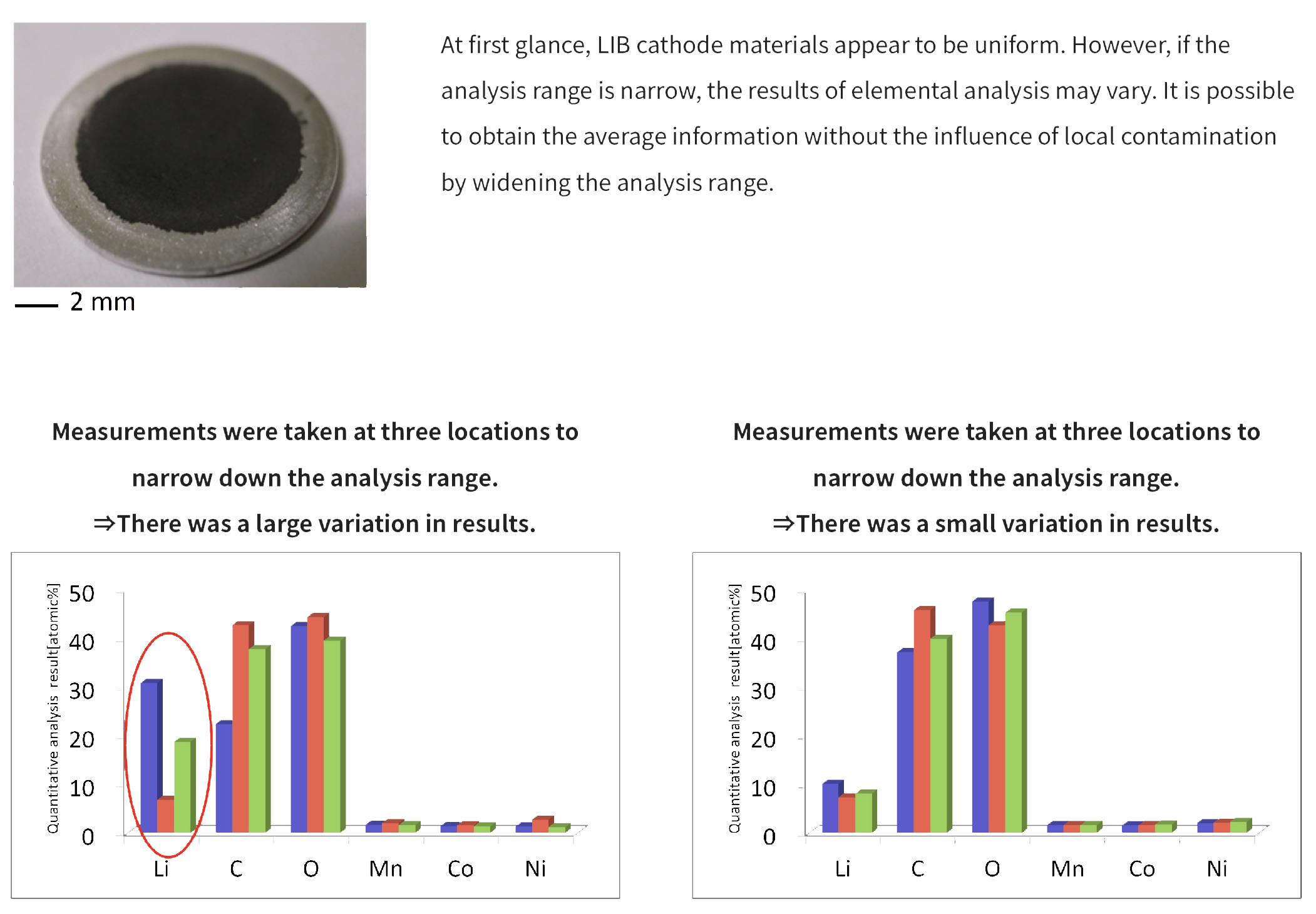
The JPS-9030 is an XPS that can analyze a wide area of the specimen - an analysis area on the millimeter order - making it ideal for average-value analysis. Specimen information can be acquired without being skewed by segregation or local contamination, so it is well suited to elemental and chemical bonding state analysis of powders, thin films and plates.
SPECSURF Software for Easy Operation
The newly developed SPECSURF Ver. 2.0 software provides a user-friendly operating environment that can be driven with the mouse alone, combining a Ribbon-style GUI with a tab window system.
- One click to save, read out and set measurement conditions
- One click to set up multiple-specimen measurement
- An accurate measurement completion time prediction function enables seamless specimen replacement and measurement
Mg/Al Twin Anode X-ray Source
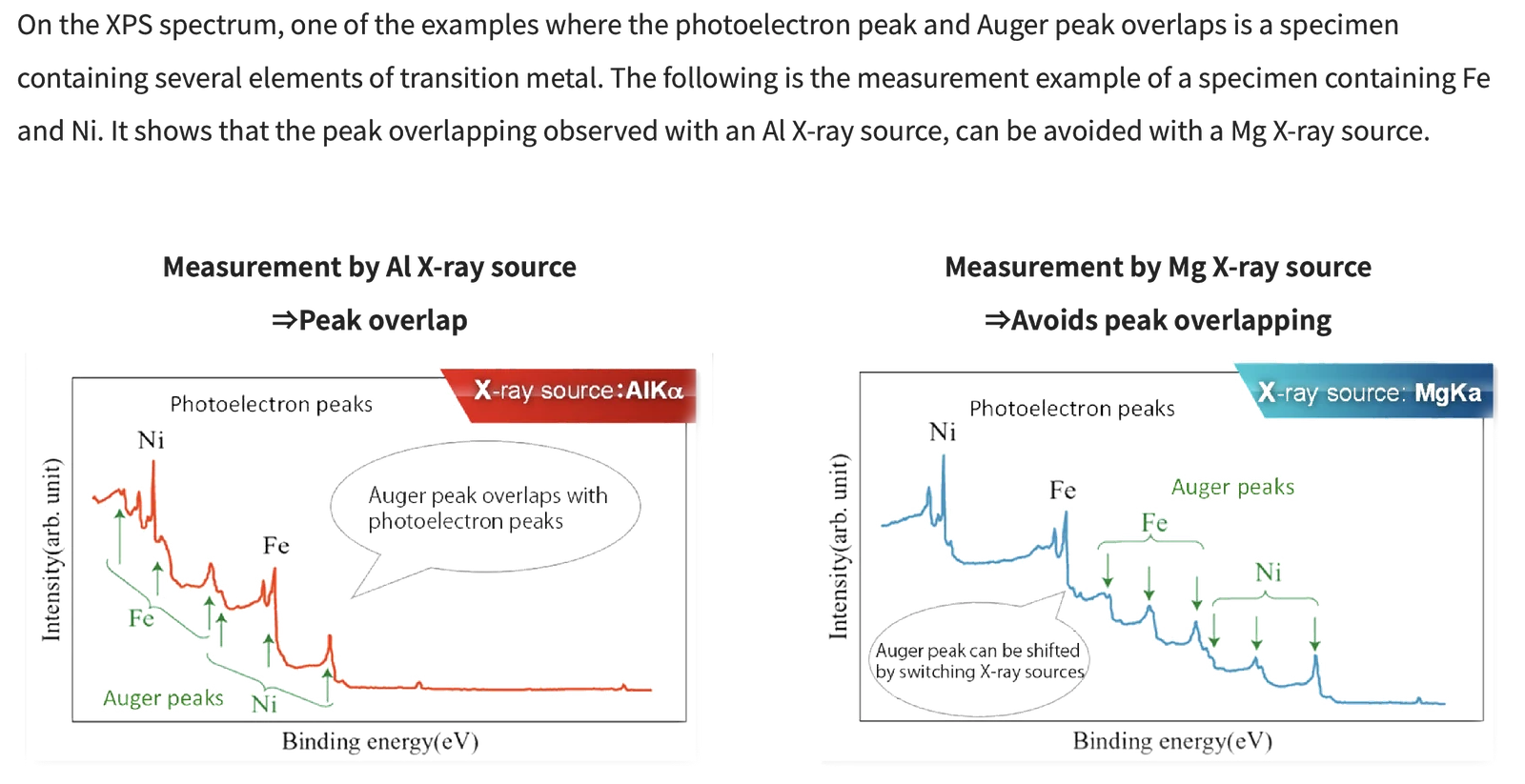
The JPS-9030 can use both a monochromatic X-ray source and an Mg/Al twin anode X-ray source. The twin anode source switches the X-rays irradiating the specimen between the Mg K line and the Al K line, which makes it possible to analyze specimens containing many elements where photoelectron peaks and Auger peaks overlap.
Kaufman-Type Ion Source
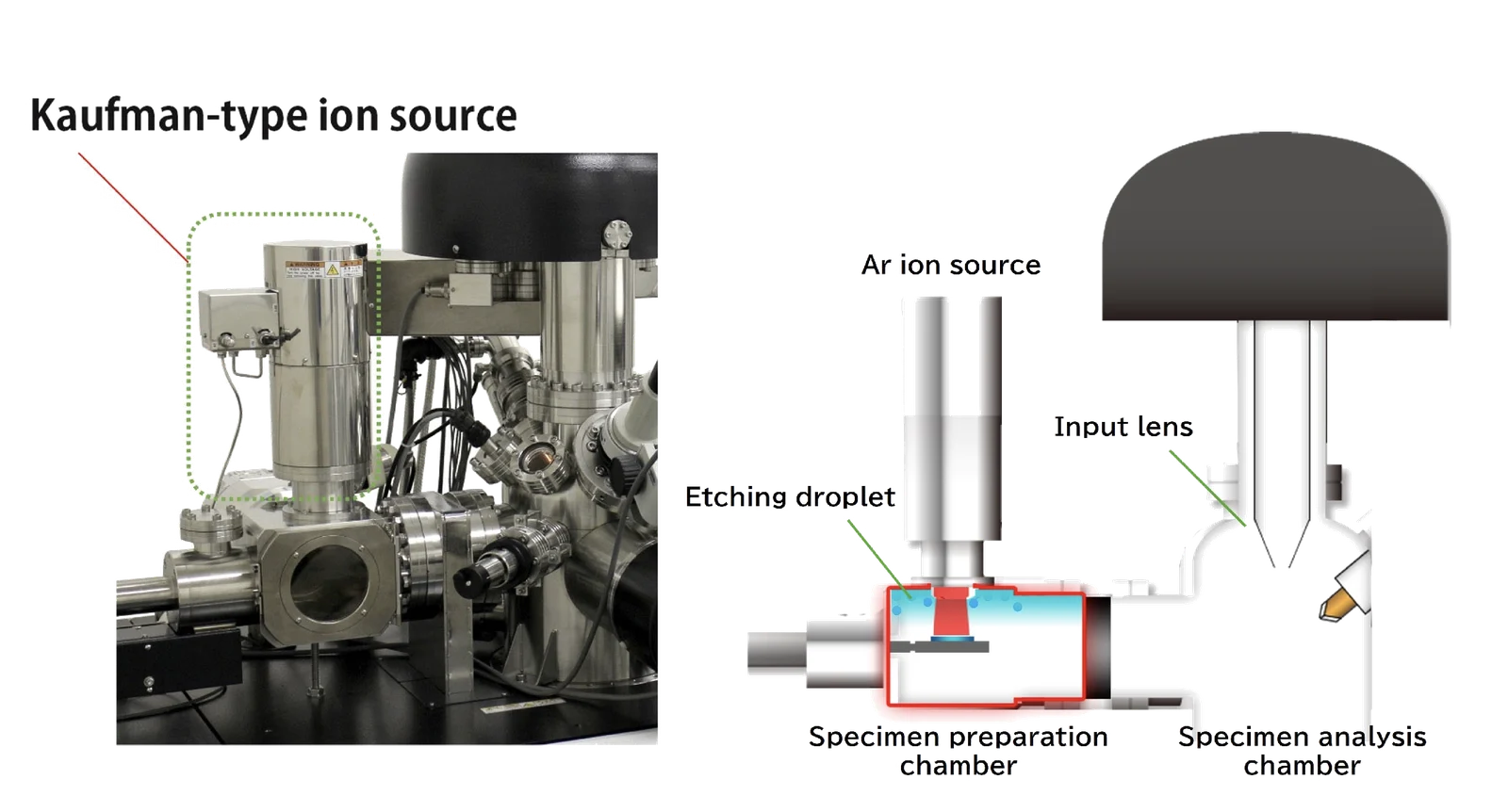
A Kaufman-type ion source is installed as the Ar ion source. Because it supports a large current, practical etching can be performed even at low accelerating voltage, allowing etching while preserving the specimen structure.
The ion source is placed in the specimen preparation chamber, so contamination caused by etching is confined there - protecting the ultra-high-vacuum analysis chamber from contamination.
A Wealth of Options
The JPS-9030 offers a variety of optional attachments, and JEOL will also produce attachments to order according to user requests:
- Monochromatic X-ray source for improved energy resolution
- Ar gas cluster ion source, suitable for easily damaged organic specimens
- Infrared heating system raising the specimen temperature up to 1,000°C
- Transfer vessel supporting air-isolated transfer of specimens
What Can Be Done with XPS
Elemental Analysis of the Top Surface
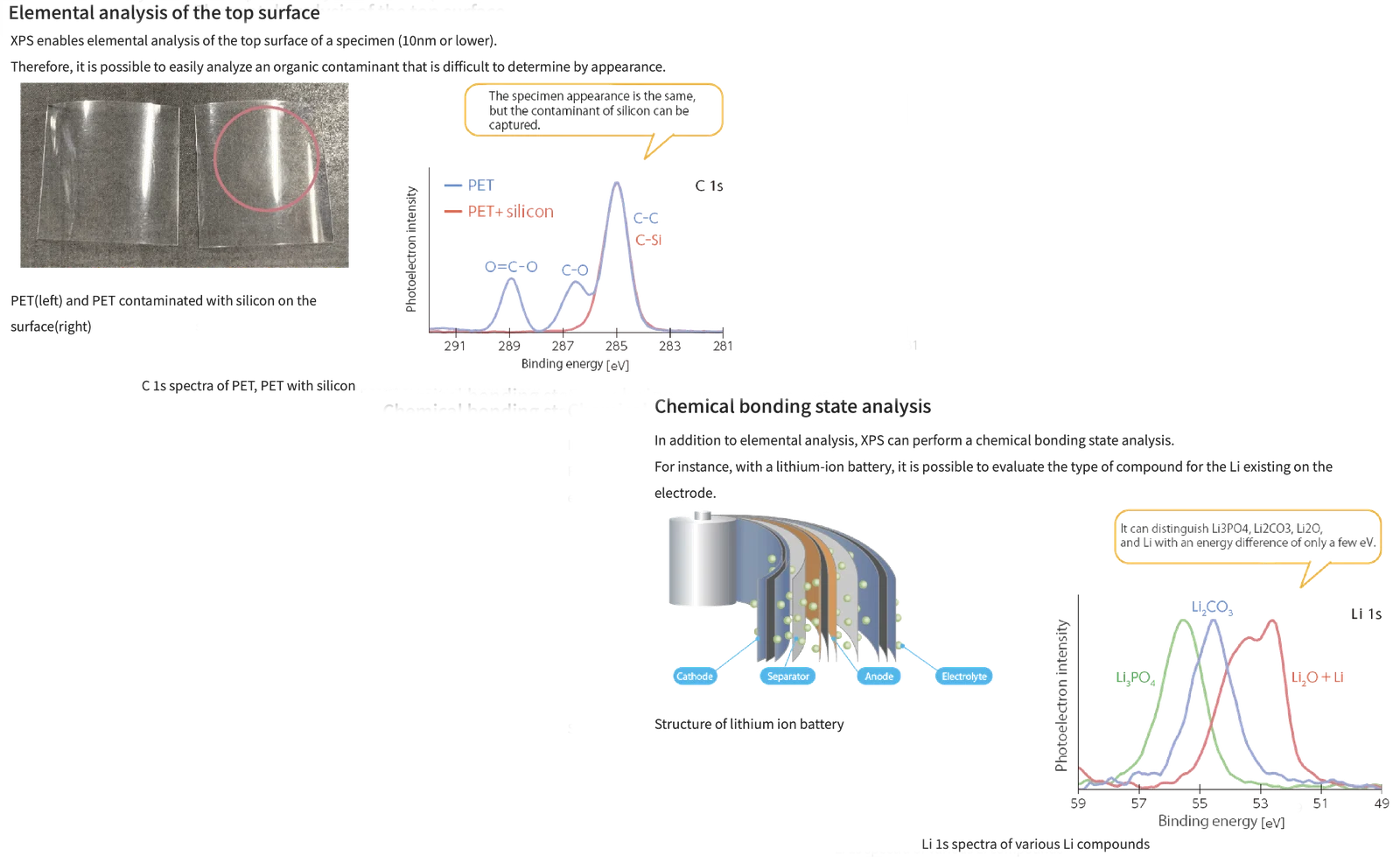
XPS performs elemental analysis of the very top surface of a specimen (10 nm or less), making it easy to identify organic contaminants that are difficult to determine by appearance - for example, distinguishing clean PET from PET contaminated with silicon via the C 1s spectra.
Chemical Bonding State Analysis
Beyond elemental analysis, XPS can determine chemical bonding states. With a lithium-ion battery, for instance, it is possible to evaluate which type of Li compound is present on the electrode from the Li 1s spectra.
Depth Profile Analysis
Depth profile analysis with XPS can evaluate the layer structure of specimens ranging from very thin films of about 10 nm up to several micrometers thick, including the chemical bonding states at the interfaces - as demonstrated on an antireflective coating on a glass surface.
Specifications
| Specifications | JPS-9030 |
|---|---|
| Intensity (Mg Kα, 300W equivalent) | 1,000,000 cps or more (Energy resolution (FWHM) for Ag 3d5/2: 1.00 eV or less) |
| X-ray source | Maximum accelerating voltage and emission current: 12 kV, 50 mA, Mg/Al twin target |
| Illumination lens | Three-stage cylindrical electrostatic lens |
| Energy analyzer | Electrostatic hemispherical analyzer |
| Energy sweep method | Constant Analyzer Energy method Constant Retarding Ratio method |
| Detector | Multi-channel plate |
| Etching ion source | High speed Kaufman-type |
| Ultimate pressure | 7×10⁻⁸ Pa or lower |