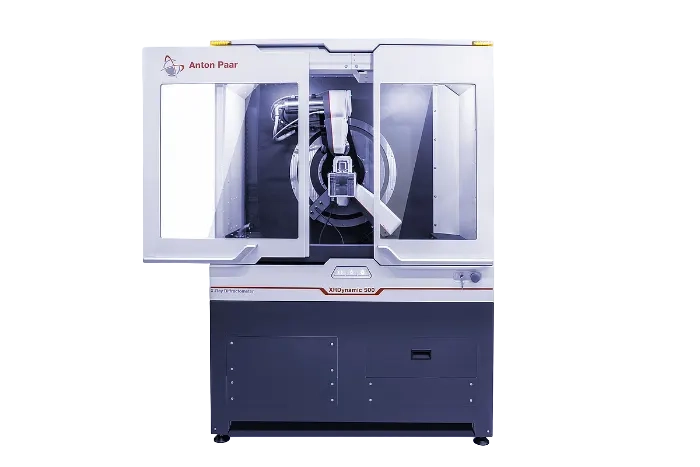
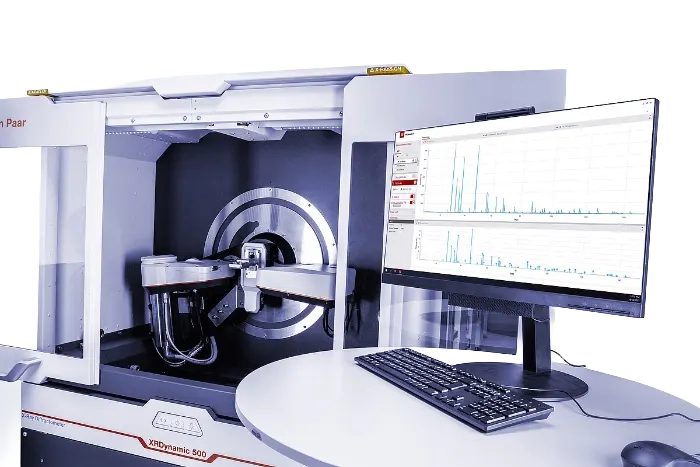
Automated Multipurpose X-Ray Diffractometer: XRDynamic 500
The X-ray diffractometer XRDynamic 500 drives unbeatable XRD data quality with maximum efficiency. Enjoy the benefits of a versatile platform covering a wide variety of applications with optimal solutions for powder XRD, non-ambient XRD, PDF analysis, SAXS, and more.
Manufacturer: Anton Paar — Austria
Overview
Anton Paar’s precise and flexible XRD solutions combine the best possible data quality with unrivalled measurement efficiency. The systems are designed for reliable and intuitive use and offer a high degree of automation so every user can benefit from increased sample throughput and maximum instrument uptime.
Key Features
- Out-of-the-box: Best-in-class resolution/signal-to-noise ratio
- TruBeam™ concept: Larger goniometer radius, evacuated beam path
- Full automation: X-ray optics and beam geometry change
- Efficiency: Increase instrument usage by up to 50 %
- Maximum convenience: Self-alignment of instrument and sample
Automated Multipurpose XRD - XRDynamic 500
The Automated Multipurpose X-ray diffractometer XRDynamic 500 drives unbeatable XRD data quality with maximum efficiency. Enjoy the benefits of a versatile platform covering a wide variety of applications with optimal solutions for powder XRD, non-ambient XRD, PDF analysis, SAXS, and more. With fully automated optics and alignment routines, it allows everyone, from novices to experts, to collect top-quality XRD data quickly while minimizing errors. XRDynamic 500: Driving XRD.
Unmatched Data Quality
XRDynamic 500's unique TruBeam™ concept combines a large goniometer radius, an evacuated beam path, and fully automated X-ray optics/beam geometry changing. TruBeam™ ensures better data quality than conventional X-ray diffractometers. XRDynamic 500 offers best-in-class resolution (FWHM 0.021° for 1st LaB₆ standard peak) with a standard Bragg-Brentano configuration, as well as a superior signal-to-noise ratio with up to 50 % less measurement background and minimal parasitic air scattering. The instrument self-aligns for optimal measurement conditions and reliable results.
Full Automation: Maximum Efficiency
Full automation of optics, beam geometries, stages, and sample handling with the XRDynamic Autosampler ensures maximum efficiency without compromising data quality. With capacity for up to 105 samples – using industry-standard holders – it sets a new benchmark for high-throughput, hands-free XRD measurement. Quickly change configuration (even the X-ray tube), thanks to quick connectors and auto-alignment, and be up and running again in no time. Full automation of all optics – including absorbers/filters, the beam mask, Soller slits, divergence slits, anti-scatter slits, and parallel plate collimators – enables users to completely change the measurement configuration in an instant, without manual interaction, and measure different sample types. Use up to three beam geometries within a single measurement batch, with all mirrors and monochromators fitted in an automated motorized optics stack.
Automated Precision: Daily Convenience
The patented source pitch concept with an additional tilt axis delivers automated, precise alignment of all optical components with any X-ray source. Benefit from maximum primary beam intensity thanks to automatic alignment with the perfect X-ray source take-off angle for all X-ray mirrors and flat monochromators. Effortless connection of all stages enables quick setup changes, while automated component recognition for both optics and stages ensures the correct instrument configuration at all times.
XRDynamic 500 meets the requirements of experts and novices alike. The XRDdrive control software seamlessly combines straightforward instrument handling and workflows with as much, or as little, detail as you need, thanks to automation. All of the necessary connections for non-ambient experiments are located directly in the diffractometer housing. The option of an integrated non-ambient control unit (CCU) facilitates working with and switching between different non-ambient attachments.
Full Flexibility: For Every Application
XRDynamic 500 combines maximum measurement flexibility in a single X-ray diffractometer platform. Whether you use it for reflection, transmission, or non-ambient studies, XRDynamic 500 offers sample stages and holders for every use case. Use versatile instrument setups for every application with optimized solutions for powder XRD, non-ambient XRD, PDF analysis, and SAXS. High-quality components produced in-house and cutting-edge pixel detection technology make this a premium-quality instrument.
For high-throughput applications, the XRDynamic Autosampler uniquely enables the unattended analysis of up to 105 samples of all types – including bulk materials, powders, fibers, thin films, and even air-sensitive samples – while consistently ensuring optimal measurement quality.
Renowned Expertise
Users benefit from certified and qualified service worldwide, with dedicated personal support – maximizing uptime. We don't just sell an instrument, we accompany you throughout the whole product life cycle. Our application support and expert advice help you achieve meaningful results quickly and efficiently for all your application needs. Together with you, we push the limits of technology.
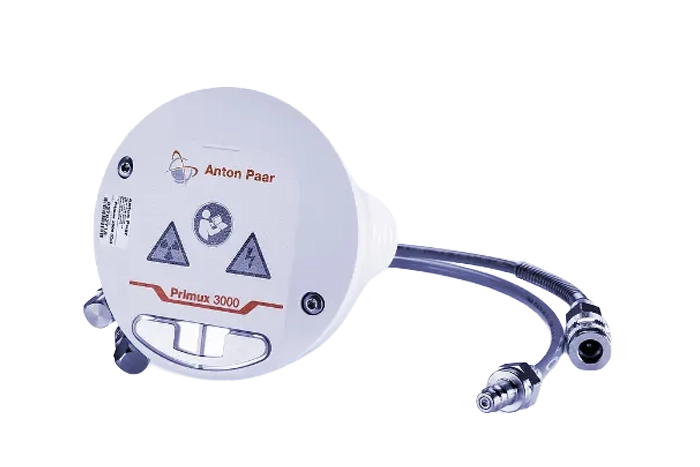
Sealed-Tube X-ray Source: Primux 3000
Primux 3000 is a high-performance sealed-tube X-ray source from Anton Paar which offers a highly brilliant line or point focus X-ray beam. Using the latest metal-ceramic X-ray tubes, Primux 3000 provides a robust design, maximum user safety, and straight-forward integration into XRDynamic 500 or any other advanced X-ray instrument.
The Ideal X-ray Source for XRD and SAXS
The Primux 3000 sealed-tube X-ray source combines a modern metal-ceramic X-ray tube with a superior high-voltage generator to provide a highly brilliant X-ray beam with a power of up to 3 kW. Either line or point focus can be used. Its high brilliance makes Primux 3000 the optimal X-ray source for a wide range of X-ray analytical applications such as X-ray diffraction (XRD) or small-angle X-ray scattering (SAXS).
A Wide Variety of Anode Materials
The X-ray tube of Primux 3000 is available as standard with Cr, Co, Cu, Mo, and Ag anodes (others available on request) to offer a solution for all challenges in XRD and SAXS. The X-ray tube is embedded in a proprietary, water-cooled jacket which ensures high thermal stability and extends the lifetime of the X-ray tube.
Easy Exchange of the X-ray Tube in a Matter of Minutes
The clever design of the Primux 3000 tube tower not only guarantees maximum user safety, but also allows the X-ray tube to be exchanged within a matter of minutes when a different tube anode type is required. In addition, the tube focus can easily be switched from line to point, and vice versa, by a simple rotation of the tube without the need to disconnect any cables or hoses.
Advanced XRD Optics
The XRDynamic 500 optics are developed and produced by AXO DRESDEN, an Anton Paar company with more than 20 years of experience in high-precision deposition and X-ray optics design. The comprehensive portfolio includes flat multilayer monochromators (for divergent beam applications) and multilayer optics for parallel and focusing beam applications. All optics are designed to fit in the optics stack of XRDynamic 500 where each component can be automatically aligned and up to three different beam geometries can be used for ultimate convenience and efficiency in multi-user environments.
Obtain Highest Intensity with All Optics
All X-ray optics for XRDynamic 500 are perfectly aligned with the X-ray source via optimized take-off angle to ensure the maximum beam intensity on the sample under all conditions. The motorized optics stack of XRDynamic 500 enables every optic to be accurately positioned while under vacuum to further boost the intensity on the sample, resulting in the fastest possible measurement speed no matter the beam geometry.
Parallel and Focusing Beam Optics for Every Wavelength
For beam-shaping optics, both parallel beam (parabolic) and focusing beam (elliptical) multilayer mirrors are available for every source anode type offered with XRDynamic 500. Whether a parallel beam is required for non-ambient or residual stress applications, or a focusing beam is needed for transmission studies of battery materials or PDF analysis, the range of optics available for XRDynamic 500 ensures measurements with an optimized beam geometry and with the source of your choice.
Maximum Kβ Suppression
Primary monochromators can be used to both suppress Kβ radiation and to reduce fluorescence from certain elements contained in the sample. The divergent beam monochromators for XRDynamic 500 are available with different multilayers and can be used with X-ray tubes of all anode types. Anton Paar uniquely offers Ni/C multilayer monochromators and mirrors optimized for Cu Kα radiation which offer unbeatable Kβ suppression in addition to superior signal-to-noise ratio for ultimate performance.
XRD Sample Holders and Stages
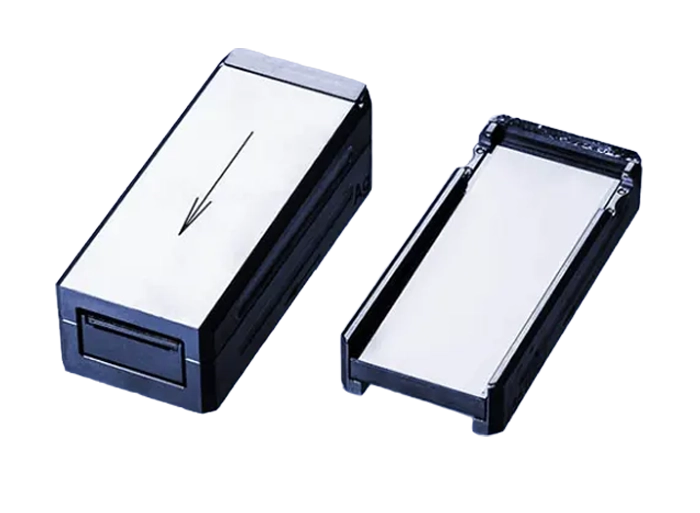
Whether you perform measurements in reflection or transmission, with capillaries, or under non-ambient or operando conditions, XRDynamic 500 offers sample stages and XRD sample holders for every eventuality. Component recognition and automatic alignment of all ambient and non-ambient stages allow fast exchange between different configurations, while a broad range of sample holders caters to every sample type in small or large quantities.
Large Variety of Sample Stages for Flexibility in Applications
The variety of sample stages available for XRDynamic 500 covers a wide range of sample types and applications, giving you maximum flexibility in your work. Stages can be fitted on the Z stage of XRDynamic 500 for precise sample alignment so that every sample – from simple inorganic powder mixtures to more complex organic materials and even nanomaterials – can be optimally investigated. The ambient sample stage portfolio includes:
- Sample spinner stage for reflection and transmission measurements
- Capillary spinner stage
- XY stage for solid samples or with sample changer options for up to 12 samples
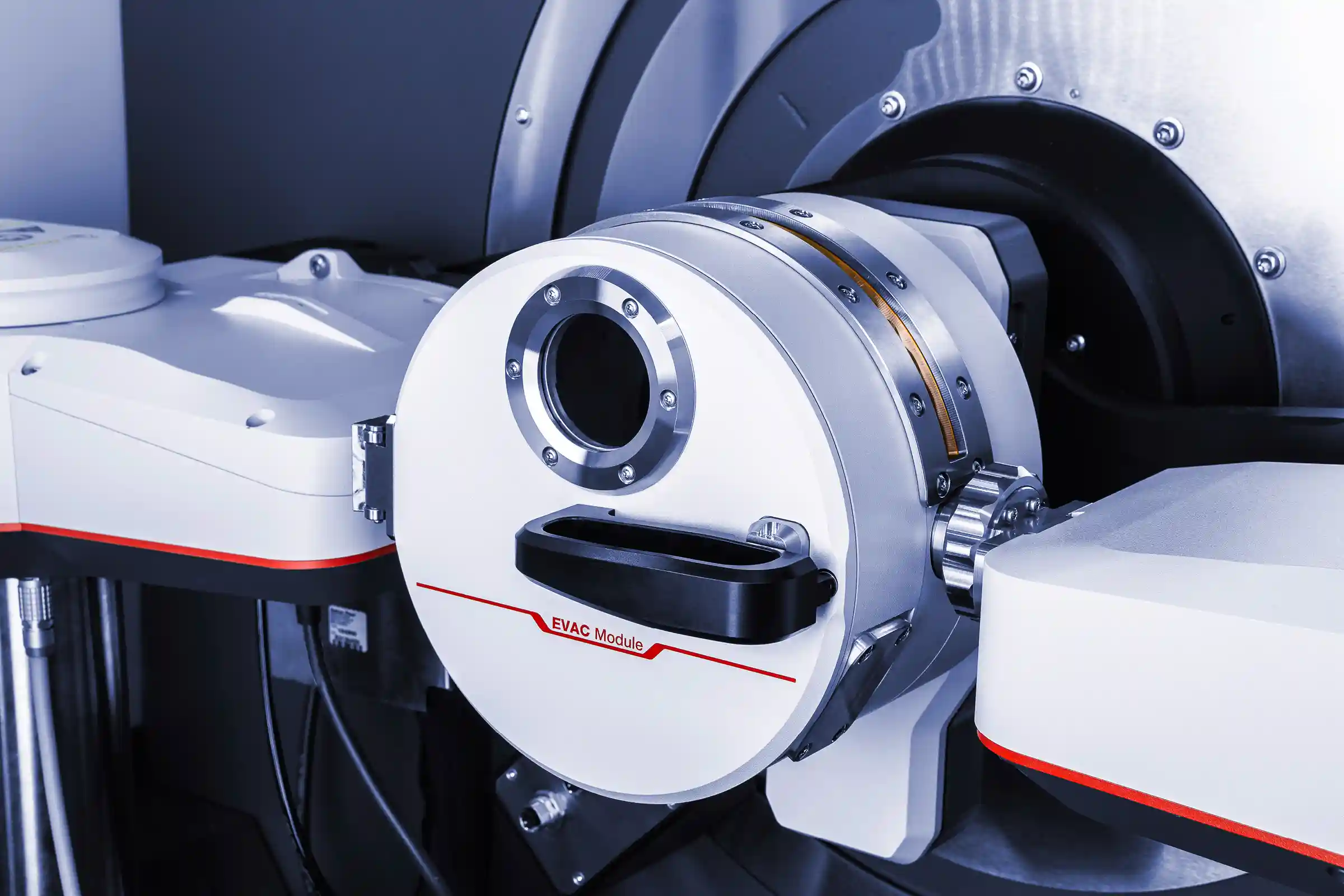
- EVAC Module for SAXS and high-resolution XRD measurements with fully evacuated beam path
The sample stage portfolio is complemented by Anton Paar’s world-leading non-ambient XRD attachments, which offer the widest-ranging non-ambient specifications on the market.
XRD Sample Holders for Operando Battery Measurements
Sample holders for in situ or operando measurements of pouch cells and coin cells in transmission or reflection geometry enable you to perform complex electrochemical measurements while benefitting from the high data quality and high level of automation provided by XRDynamic 500. For operando measurements of electrodes, an electrochemical cell is available with different measurement configurations possible.
Sample Holders for any Application
Standard powder sample holders made of stainless steel or PMMA are available with a variety of sample cavity dimensions catering to large or small sample quantities in reflection or transmission. In addition, backloading, zero background, and gas-tight sample holders, as well as XRD sample holders for solids/pellets, can be used depending on the requirements of the sample and the application.
Sample Changer Options for High-Throughput Measurements
The sample changer option for the XRDynamic 500 XY stage is available with three, six, 12, or 48 sample positions for measurements in reflection or transmission geometry. The XRDynamic Autosampler sets the benchmark with the ability to handle up to 105 samples using industry-standard sample holders.
The available solutions allow high-throughput analysis and, in combination with the automated optics of XRDynamic 500, measurements with different instrument configurations and on different sample types – performed automatically without any user interaction.
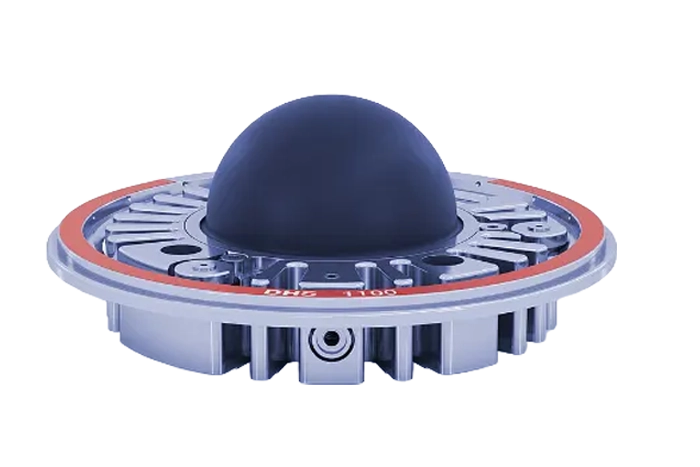
Domed Hot Stage for Four-Circle Goniometers: DHS 1100
DHS 1100 is a heating attachment which is a further development of the well-established DHS 900 Domed Hot Stage. It has an increased temperature range of 25 to 1100 °C. DHS 1100 is small and lightweight and can be mounted on almost all common four-circle goniometers and many XYZ stages. Under its innovative graphite dome, samples can be measured in vacuum, air and various other gases. DHS 1100 is an excellent sample stage for in-situ high-temperature studies of phase transformations, texture, and internal stress in crystalline materials.
Highlights
- For in-situ high-temperature studies on almost all common four-circle goniometers and many XYZ stages
- Temperature range from 25 °C to 1100 °C
- For investigating phase transformations, texture, and internal stress in crystalline materials
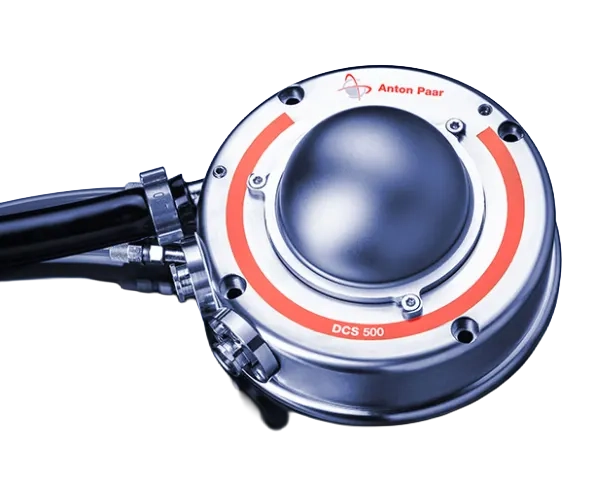
Domed Cooling Stage for Four-Circle Goniometers: DCS 500
The DCS 500 Domed Cooling Stage is the smallest attachment for in-situ X-ray diffraction studies at low and high temperatures on four-circle goniometers and XYZ stages. With a temperature range from -180 °C to +500 °C and a theta angle from almost 0° to 90° 2Θ for all Φ angles, DCS 500 is the ideal sample stage for in-situ studies of layered structures and for investigating phase transformations and stress in crystalline material.
Highlights
- For in-situ X-ray diffraction studies at low and high temperatures on four-circle goniometers and XYZ stages
- Temperature range from -180 °C to +500 °C
- For the investigation of layered structures, phase transformations, and stress in crystalline material
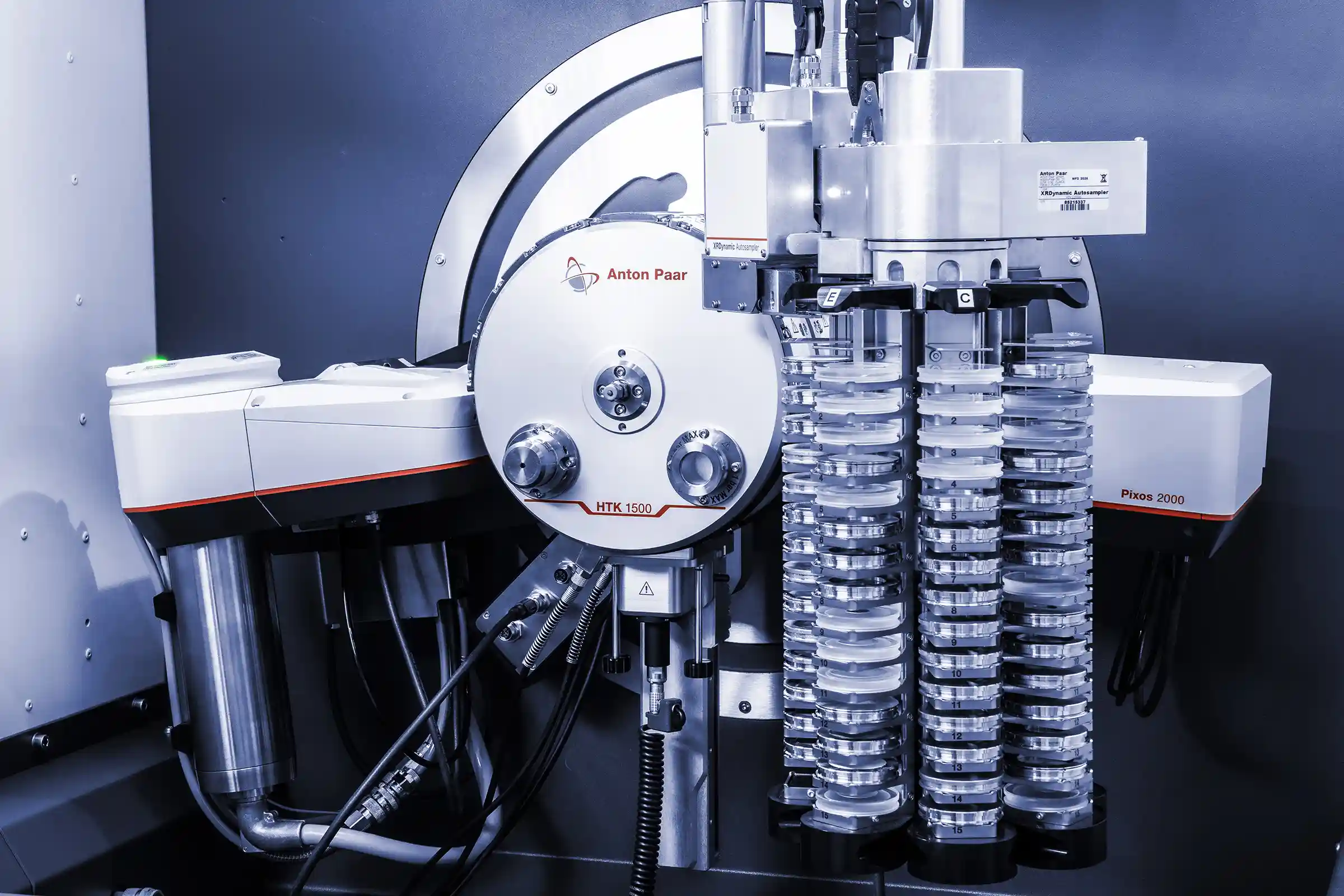
XRDynamic Autosampler and Sample Changer (Options)
The XRDynamic Autosampler and sample changer options for the XY Stage enhance Anton Paar’s XRD solutions with high sample capacity, seamless integration, and flexible performance. Combined with XRDynamic 500, they enable efficient, automated measurements for all sample types, with consistently reliable results.
Highest Sample Capacity
The XRDynamic Autosampler sets the benchmark with the ability to handle up to 105 samples using industry-standard sample holders. This unmatched capacity enables longer walkaway times, and significantly boosts lab throughput and efficiency:
- Supports 105 standard sample holders for transmission and/or reflection measurements
- Designed for all sample types (powders, solids, fibers, foils, thin films, air-sensitive samples)
- Enables extended, unattended operation
Outstanding Performance and Flexibility
The XRDynamic Autosampler as well as the sample changer option for the XY Stage facilitate operation and ensure precise results across various sample types and applications, thanks to automatic geometry switching and height alignment – saving hours of manual instrument adaptations.
- Supports domed holders for air-sensitive samples
- Delivers consistent, high-quality data
Seamless Integration
Customers benefit from error minimization and efficiency maximization. Fully integrated with XRDdrive software, the sample changer option for the XY Stage as well as the XRDynamic Autosampler and its magazines are instantly recognized upon connection. Combined with the automation level of XRDynamic 500, it ensures:
- Plug-and-play setup
- Reduced user intervention
- High throughput with reduced manual handling errors
Scalable and Non-Intrusive
Easily mounted on any XRDynamic 500 instrument, the XRDynamic Autosampler never interferes with other measurements when it is not in use, and it is both removable and expandable:
- No interference with other measurements
- Scales from one to seven magazines
- Fast and precise installation
A Portfolio Covering Every Need
The XRDynamic Autosampler perfectly complements the existing portfolio of the XRDynamic 500 sample changer option for the XY Stage, with three, six, 12, or 48 sample positions. This gives users even greater flexibility when it comes to choosing the perfect solution for their applications and challenges.
Models
Accessories for XRDynamic 500: Automated Sample Changer is available in 2 models: XRDynamic Autosampler, XY Stage.
- XRDynamic Autosampler: Autosampling of up to 105 samples.
- XY Stage: Autosampling of three, six, 12, or 48 samples.
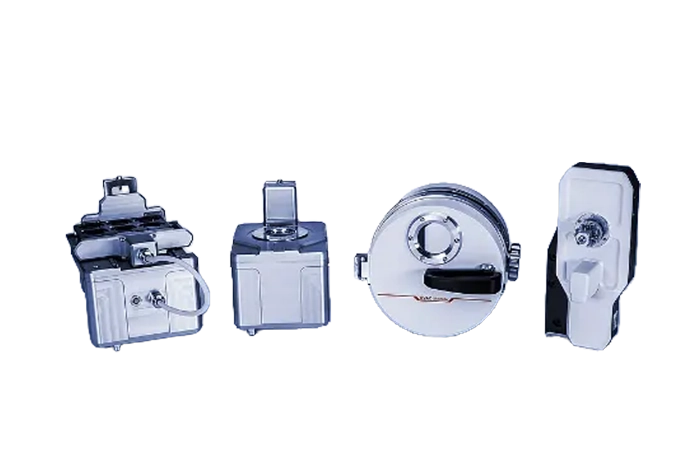
Evacuated Chamber for High-Resolution SAXS and XRD: EVAC Module
The EVAC module for XRDynamic 500 offers a fully evacuated beam path for SAXS and XRD measurements to completely remove parasitic air scattering, offering maximum beam intensity on the sample and unbeatable signal-to-noise ratio. Capable of being used with all XRD or SAXS sample holders over the widest possible measurement range, the EVAC module delivers unrivalled measurement performance with the flexibility to measure how you want. With the included scatterless SAXS optics, the EVAC module can produce SAXS data of a quality never before seen on a diffractometer!
Best-in-Class Nanostructural Analysis on a Diffractometer
The combination of EVAC module and XRDynamic 500 brings the quality of a dedicated line collimation SAXS instrument to a diffractometer for the first time. When used with optimized SAXS optics, including the EVAC module’s scatterless slits, a resolution of qmin = 0.05 nm⁻¹ can be achieved which sets a new standard for SAXS measurements on an XRD platform. With the EVAC module and XRDynamic 500, SAXS measurements of isotropic, colloidal, and biological samples just got a whole lot easier!
Unrivalled Data Quality with no Parasitic Air Scattering
The fully evacuated beam path, from source to detector, made possible by the EVAC module and XRDynamic 500’s evacuated optics units offers the best possible signal-to-noise ratio as all parasitic air scattering is removed. This provides a boost in intensity for all measurements and is especially beneficial when working with lower-energy X-rays such as Cr or Co Kα.
Measurement without Restrictions for SAXS, WAXS, XRD, and PDF Analysis
Whether for SAXS, XRD, or PDF measurements, the EVAC module doesn’t place any limitations on how you perform your measurement. Reflection or transmission, powder sample carriers or capillaries, everything is possible. Most importantly of all, thanks to the unique feature whereby the EVAC module rotates with the secondary goniometer arm, there is no restriction on the measurement angle and it’s possible to seamlessly measure data from 0° right up to 162.5° 2θ in one go.
High-Temperature Oven Chamber: HTK 1200N
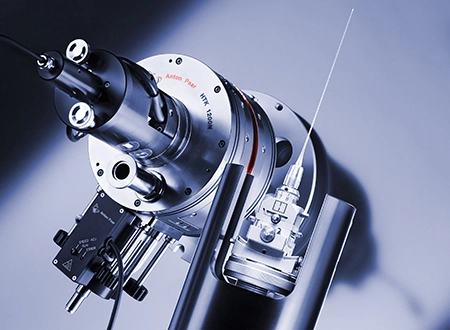
The HTK 1200N Capillary Extension is the first “two-in-one” setup for combined reflection and transmission XRD studies at high temperatures up to 1200 °C. It turns the HTK 1200N high temperature chamber into a high-end capillary heater for transmission XRD. Benefits include high-temperature homogeneity and excellent temperature control combined with easy capillary handling. It takes only a few minutes for you to convert from the flat sample to the capillary setup, giving you the possibility to choose the optimum beam geometry for every sample.
Highlights
- Dual setup for both flat sample and capillary XRD studies up to 1,200 °C
- Quick conversion to capillary heater without removing from diffractometer
- Precise temperature control with uniform heating across sample volume
- Supports sealed, unsealed, and open capillaries for various sample types
High-Temperature Strip Heater Chambers: HTK 16N | HTK 2000N
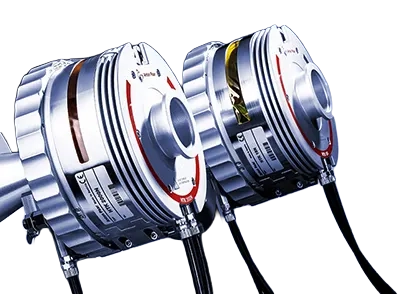
The HTK 16N and HTK 2000N high temperature chambers are well-proven instruments for in-situ X-ray diffraction studies up to 1600 °C and 2300 °C, respectively. The sample is directly heated with a heating filament. The design of HTK 16N and HTK 2000N allows you to work at high temperatures in different atmospheres. The instruments are made of high-quality materials which guarantee a long working life.
Highlights
- Supports in-situ XRD studies at up to 1,600 °C or 2,300 °C
- Minimized sample displacement with stable heating filament positioning
- Precise temperature control with dual thermocouples and minimal gradients
- Durable design with high-grade materials and quick, easy sample exchange
High-Temperature Chamber: HTK 1500
The HTK 1500 High-Temperature Chamber is the new benchmark of environmental heaters for high-temperature X-ray diffraction (XRD) that allows you to heat all types of sample materials – including crystalline powders and bulk samples – homogeneously up to 1,500 °C. The position of the heating rods, together with a highly accurate temperature measurement, makes HTK 1500 the only ‘true’ environmental heater up to 1,500 °C on the market.
The New Benchmark of Environmental Heating
Going above and beyond with the ‘true’ environmental heater, HTK 1500 guarantees the highest temperatures without compromising accuracy from 25 °C to 1,500°C. Thanks to its smart design and robust materials for the heater and insulation, HTK 1500 delivers high-enough temperatures for applications in e.g. ceramics or metals. The temperature sensor in HTK 1500 is located right underneath the sample in a protective ceramic sample holder. This setup provides for a highly repeatable and reliable temperature measurement and stable temperature control compared to other arrangements with free-standing temperature sensors.
Power up Your Data Quality with Sample Spinning
Sample spinning is the key to sufficient sample statistics e.g. by overcoming preferred orientation and therefore improves data quality. The HTK 1500 design as an environmental heater offers a free-standing sample holder, which allows sample spinning during high temperature X-ray diffraction (XRD) measurements.
A Solution for Every Sample
For studies of air-sensitive and / or organic powders and liquids the use of capillaries and therefore the possibility to work in transmission geometry is necessary. A fast conversion from reflection to transmission mode is essential especially when applications and sample types vary a lot in multiuser laboratories. With HTK 1500, users can easily and quickly switch between the two different measurement geometries.
Inert Materials for Outstanding Endurance
The design of HTK 1500 employs materials of high chemical resistance. The chemically inert sample carriers, made of alumina, minimize the risk of reactions with the samples – even at very high temperatures. To ensure that the sample is protected from oxidation during heating, measurements can be performed under different inert gas atmospheres.
The Perfect Match with XRDynamic 500
HTK 1500 is a perfect match for XRDynamic 500, which was designed with non-ambient experiments in mind. The combination of HTK 1500 with XRDynamic 500 guarantees a high degree of automation like stage recognition, stage and sample (re)alignment, easy connection of cooling water, vacuum and gas lines, and straightforward setup of batch experiments. The smooth integration into the XRDynamic 500 control software makes for a convenient way of working for your high temperature XRD analysis.
Ultimate Ease-of-Use
A slider for quick and reproducible mounting and demounting of the sample holder ensures easy handling and swift sample exchange. The provided alumina sample carriers can accommodate various sample forms like powder samples, bulk samples, and thin layers.
Low-Temperature Chamber: TTK 600
The TTK 600 Low-Temperature Chamber is a non-ambient attachment for powder X-ray diffraction studies from -190°C to 600°C. Different sample holders allow investigating samples in reflection and transmission geometry. Samples can be measured in vacuum, air or inert gases. An antechamber option allows safe transfer of air-sensitive samples into the TTK 600. The TTK 600 fits to all common powder diffractometers and is the instrument of choice for X-ray structure analysis of various sample types at low and medium temperatures.
Highlights
- Non-ambient attachment for X-ray diffraction studies from -190 °C to 600 °C
- For investigations on samples in reflection and transmission geometry
- Also for air-sensitive samples and in-operando studies on batteries
- Fits to all common powder diffractometers
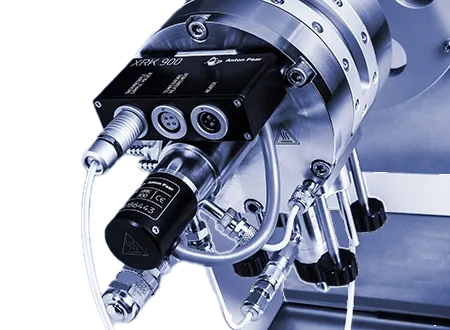
Reactor Chamber: XRK 900
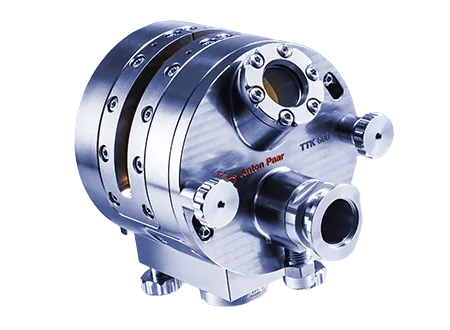
The XRK 900 reactor chamber is the only heating chamber on the market specifically designed for X-ray diffraction experiments for studies of solid state and solid state-gas reactions up to 900 °C and 10 bar. It is a unique tool for in-situ X-ray diffraction investigations - unmatched in robustness and performance.
Highlights
- Reactor chamber for all common diffractometers
- For solid state and solid state-gas reactions up to 900 °C and 10 bar
- Sample holder options: chemically resistant materials, sample spinning, open holders for gas extraction through the sample
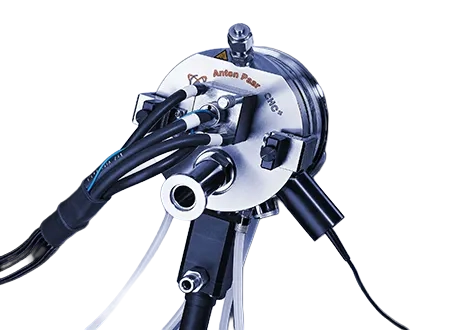
Cryo & Humidity Chamber: CHC plus⁺
CHC plus+ is a unique combination of the multi-purpose CHC Cryo & Humidity Chamber and an advanced humidity (RH) generator for the analysis of humidity-dependent and/or temperature-dependent structural changes in materials using X-ray diffraction. Investigations into pharmaceuticals, fine chemicals, clays or zeolites can be carried out in humid gas, air, inert gas or vacuum. Controlled humidity is possible for sample temperatures from 10 °C to 80 °C. Due to its versatility, the new combined CHC plus+ setup opens new dimensions in analysis for materials science and is a true "workhorse" for the pharmaceutical industry.
Highlights
- Condensation-free experiments under rel. humidity and temperature
- Overall temperature range from -180 °C to +400 °C; Controlled relative humidity studies from 10 °C to 80 °C
- Easy changeover from low-/high-temperature experiments to humidity measurements without opening the chamber
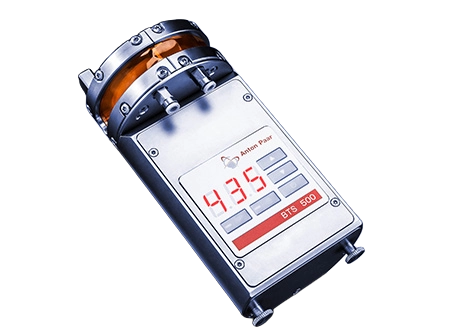
Benchtop Heating Stages: BTS 150 | BTS 500
The BTS 150 and BTS 500 Benchtop Heating Stages are the first commercial non-ambient stages for XRD studies on benchtop diffractometers. Their unique design is patented and offers all the features a benchtop diffraction application requires - compactness, reliability and ease of use! Measurements can be performed between –10 °C and 150 °C with the BTS 150 and from ambient to 500 °C with the BTS 500. Both instruments are extremely compact in design to fit into the restricted space of typical benchtop diffractometers.
Highlights
- Compact, patented design optimized for benchtop XRD applications
- Temperature control range: -10 °C to +150 °C (BTS 150) and up to 500 °C (BTS 500)
- Fast, accurate temperature control with sensor near the sample
- Straightforward sample handling, alignment, and remote control via USB
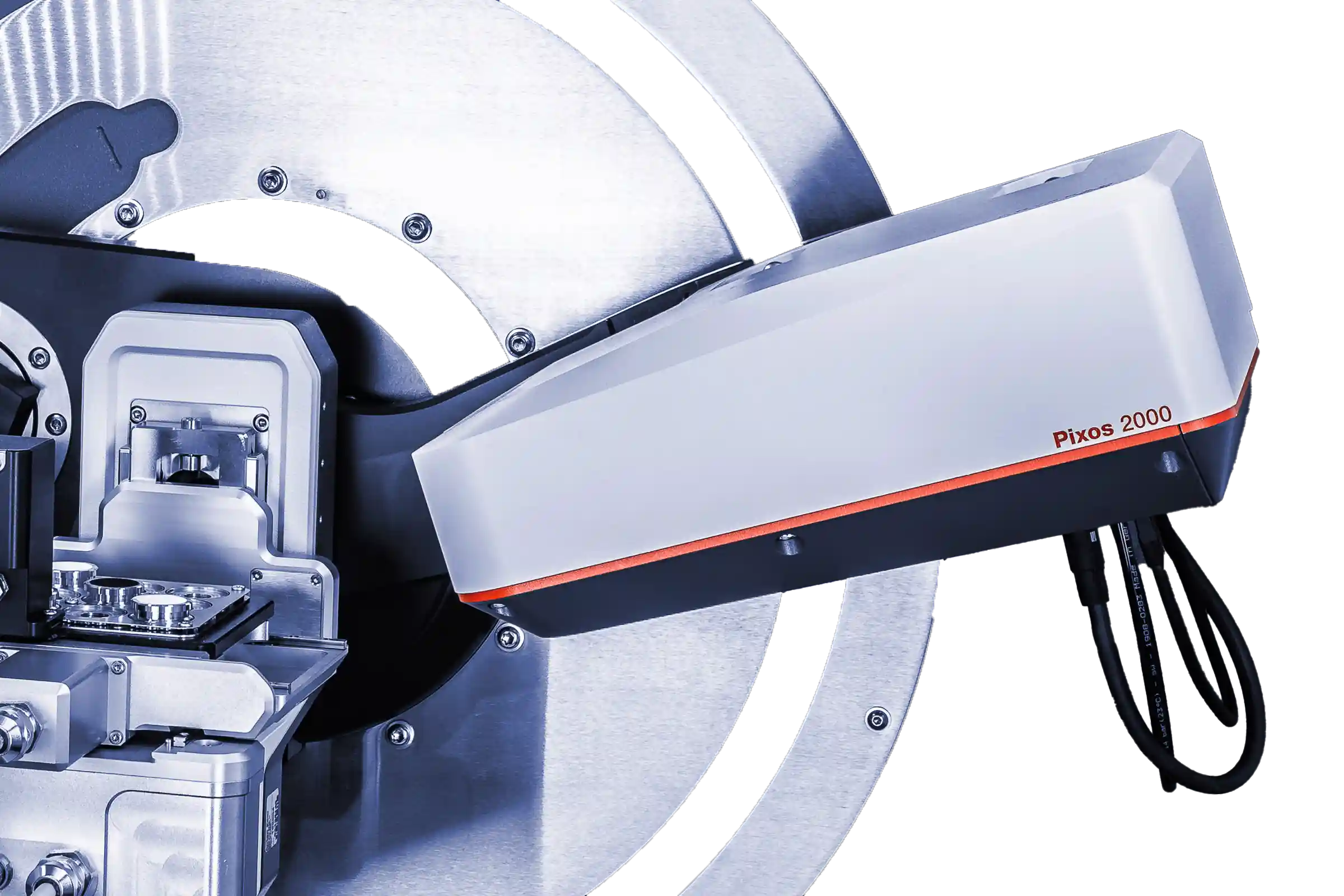
XRD Detection Units: Pixos
To obtain the best data quality from your X-ray diffraction experiments, the Pixos™ detection units combine the latest CERN detector technology by Advacam with the TruBeam™ concept of the XRDynamic 500 diffractometer. Counting individual photons with a high spatial resolution thanks to the smallest pixel size available for an XRD detector (55 µm x 55 µm), the solid-state Pixos™ detectors provide the highest intensity and best resolution for your diffraction data and can operate in 0D or 1D modes. The fully evacuated secondary optics and detector housing ensures excellent signal-to-noise ratio while maintaining optimal experimental flexibility thanks to the fully motorized X-ray optics.
Next-Generation Detector Technology for High-Quality Diffraction Data
Solid-state hybrid pixel detectors included in the Pixos™ detection units are based on the Timepix3 chip from CERN. High spatial and temporal resolution for the detection of individual photons results in excellent angular resolution of the diffraction signal when working in 1D mode. Single-photon counting detectors provide the best data quality even with low measurement signal, while a high maximum count rate allows measurements in the direct beam without the need for attenuators or beam stops.
Full Evacuation: Measure with the Lowest Possible Background
Avoiding air scattering during the measurement, the fully evacuated Pixos™ detection units ensure an optimal signal-to-noise ratio in every measurement. This is particularly important for background-sensitive measurements, such as PDF analysis or SAXS, or for small sample quantities with a weak scattering signal. In combination with the other components of the TruBeam™ concept, the evacuated secondary beam path contributes to the high data quality that can be measured by the Pixos™ detection units of XRDynamic 500.
Outstanding Resolution with the Smallest Pixel Size on the Market
The detectors of the Pixos™ detection units offer unbeatable measurement resolution thanks to a pixel size of 55 µm x 55 µm – the smallest available on the market for an XRD platform. The small pixel size, in combination with the extended goniometer radius featured in the TruBeam™ concept of XRDynamic 500, means that a measurement resolution 20 % better than a conventional diffractometer can be achieved when measuring with a standard Bragg-Brentano configuration.
Minimize Noise with Automatic Optimization
The Pixos™ detection units include a high-precision motorized anti-scatter slit which can be set using the instrument control software for each scan. With a choice of modes, it is up to you to either set a defined slit opening or to make life simpler by using the automatically optimized mode that ensures maximum shielding of scattered noise without cutting the measurement signal.
XRD Software: XRDanalysis
XRDanalysis is a next-generation software package for the analysis of powder diffraction data on Anton Paar's XRDynamic 500. It allows you to effortlessly perform profile fitting, phase identification or quantification, and microstructure analysis on data collected under both ambient and non-ambient conditions. XRDanalysis features optimized analysis workflows for different tasks to assist users new to XRD, while retaining the flexibility demanded by more advanced users.
Automate your Analysis by Integrating Multiple Analysis Tasks in a Single Workflow
Perform analysis of powder diffraction data the way you want with a flexible workflow concept that allows multiple tasks to be combined and executed with a single click. From peak search, profile fitting, phase identification, all the way through to Rietveld analysis, all steps can be combined in a single workflow to automate your analysis tasks. For evaluation of multiple data sets, batch processing can also be easily performed, even with different workflows for different data sets, if desired. This makes XRDanalysis extremely easy to be learnt and used by less experienced users, while still giving expert users the flexibility they require.
Advanced Phase Identification to Never Miss a Phase
The search/match algorithms used in XRDanalysis allow phase identification via searching in reference databases such as the PDF databases from the ICDD. An advanced residual search is performed once phases have been added, ensuring that even the most minor phase fractions can be identified. Moreover, the residual search also works when phases have been loaded manually (e.g. from a CIF) so you do not need to rely only on reference databases during phase identification.
Accurate Phase Quantification even for Minor Phases
The Rietveld refinement option in XRDanalysis allows you to perform quantitative phase and structural analysis while accounting for all instrument and sample microstructural effects. Rietveld analysis can be performed on any phase where atomic positions are available. Phases can be either directly carried over from reference database match results or manually added from CIFs; combinations of phases from both sources are also possible. The refined phase parameters not only deliver the phase fractions, but also microstructural parameters such as crystallite size and strain.
Customizable Reporting
XRDanalysis makes it possible to quickly and easily export data and graphics from every analysis step in a format of your choice. Including an optimized interface with Microsoft Office packages, the reporting and data export feature allows optimal preparation of data and graphics for publication or for further analysis outside of the XRDanalysis platform.
Automated Multipurpose X-Ray Diffractometer: XRDynamic 500
| Specification | XRDynamic 500 |
|---|---|
| X-ray Source | |
| Source Type | Primux 3000 |
| X-ray Generator | Up to 3 kW |
| Tube Voltage / Current | 20 kV to 60 kV / 2 mA to 50 mA |
| Goniometer | |
| Configuration | Vertical θ/θ geometry |
| Measurement Radius | 360 or 400 mm |
| Maximum Usable Angular Range | -95° to 162.5° 2θ |
| Minimum Step Size | 0.0001° |
| 2θ Linearity | ≤0.01° |
| Maximum Angular Speed | 15 °/sec |
| Maximum Angular Resolution | 0.021° (FWHM of 1st LaB₆ peak) |
| Sample Stages and Attachments | |
| Ambient | Fixed sample stage Sample spinner stage (reflection/transmission) XY stage (with autosampler option) XRDynamic Autosampler Capillary spinner stage EVAC module |
| Non-Ambient | HTK 1200N HTK 16N/2000N HTK 1500 TTK 600 XRK 900 CHC plus⁺ BTS 150/500 |
| Detectors | Solid-state hybrid pixel detectors: Pixos 2000 detector (0D and 1D mode) Pixos 2000 CdTe detector (0D and 1D mode) for high-energy X-rays |
| Software | XRDdrive: system control and data acquisition software XRDanalysis: data processing and analysis software for qualitative and quantitative phase analysis, microstructure analysis, and Rietveld refinement XRDview: data plotting and visualization package XRDynamic 21 CFR Part 11 package: supporting work in regulated environments and compliance with US FDA 21 CFR Part 11 regulations |
| General Specifications | |
| Exterior Dimensions (Width X Depth X Height) | 1350 mm x 1160 mm x 1850 mm |
| Weight (not Including Optional Accessories) | 750 kg |
| Power Supply | 3-Phase: 3/N/PE AC 400/230 V, 50…60 Hz, 25 A 1-Phase: 208…240 VAC, 50…60 Hz, 36 A |
| Maximum Power Consumption (without Additional Controllers for Optional Equipment) | 5.5 kW |
| Cooling Water Supply | Flow rate: > 3.6 L/min, Pressure: 4.5 – 6 bar, Temperature: < 25 °C |
Sealed-Tube X-ray Source: Primux 3000
| Specification | Primux 3000 |
|---|---|
| Target Material | Cu, Co, Cr, Mo, Ag (others available on request) |
| Focal Type | Line or point (focus size depending on tube type) |
| Max. Output Power | 3 kW |
| Max. Output Voltage | 65 kV direct voltage |
| Max. Output Current | 55 mA |
| Cooling | Water cooling |
Domed Hot Stage for Four-Circle Goniometers: DHS 1100
| Specification | DHS 1100 |
|---|---|
| Operating Temperature | 25 °C to 1100 °C |
| Temperature Measurement | Pt-10% Rh-Pt thermocouple |
| Atmospheres | Vacuum (10 -1 mbar), air, inert gas,nitrogen |
| Max. Operating Pressure | max. 0.3 bar above atmospheric pressure |
| Possible Scattering Angle | 0 to 166° 2Θ 0 to 85° Psi 0 to 360° Phi |
| Sample Holder Material | Aluminium nitride |
| Sample Diameter | max. 25 mm |
| Dome Material | Graphite |
| Transmission (incident and Diffracted Rays) | CuKα: 65% |
| Measure Geometry | Reflection |
Domed Cooling Stage for Four-Circle Goniometers: DCS 500
| Specification | DCS 500 |
|---|---|
| Operating Temperature in Air, Inert Gas | 25 °C to 500 °C |
| In Vacuum (< 5x10⁻¹ mbar) | -180 °C to 500 °C |
| Temperature Measurement | PT100 |
| Atmospheres | Vacuum (10⁻¹ mbar), air, inert gas |
| Max. Operating Pressure | 0.3 bar above atmospheric pressure |
| Sample Holder Material | Nickel-plated copper alloy |
| Sample Diameter | max. 25 mm |
| Dome Material | Graphite |
| Transmission | Cu Kα 72 % |
| Measuring Geometry | Reflection |
High-Temperature Oven Chamber: HTK 1200N
| Specification | HTK 1200N |
|---|---|
| Operating Temperature | 25 °C to 1200 °C |
| Temperature Measurement | Pt 10% RhPt thermocouple |
| Atmospheres | Vacuum (10⁻⁴ mbar), air, inert gases |
| Max. Operating Pressure | 1 bar above atmospheric pressure |
| Angle of Incidence | 0 to 164° 2Θ |
| Sample Holder Material | Aluminum oxide |
| Sample Diameter | max. 16 mm |
| Measurement Geometry | Reflection + transmission |
High-Temperature Strip Heater Chambers: HTK 16N | HTK 2000N
| Specification | HTK 16N | HTK 2000N |
|---|---|
| Operating Temperature | |
| Tungsten Heating Filament for Vacuum (≤2.10⁻⁴ mbar) | 25 °C to 2300 °C (HTK 2000N) |
| Platinum Heating Filament (Vacuum, Air, Inert Gas) | 25 °C to 1600 °C (HTK 16N | HTK 2000N) |
| Graphite Heating Filament for Vacuum (≤2.10⁻⁴ mbar) | 25 °C to 1500 °C (HTK 16N) |
| Nitrogen | 1400 °C (HTK 16N) |
| Helium | 1300 °C (HTK 16N) |
| Temperature Measurement | |
| For Pt Filaments | Pt 10% RhPt thermocouple |
| For W Filaments | W 3% Re-W 25% Re thermocouple |
| For C Filaments | Pt 10% RhPt thermocouple |
| Atmospheres | Vacuum (10⁻⁴ mbar), air, intert gas |
| Max. Operating Pressure | 0.5 bar above atmospheric pressure |
| Angle of Incidence | 4 to 164° 2Θ |
| Measure Geometry | Reflection |
High-Temperature Chamber: HTK 1500
| Specification | HTK 1500 |
|---|---|
| Temperature Range | 25 °C to +1,500 °C |
| Temperature Measurement | Pt10Rh-Pt thermocouple (type S) |
| Pressure Range | 10⁻¹ mbar to 0.5 bar rel. |
| Atmospheres | Air, vacuum, inert gases |
| Sample Type | Powders, bulk samples |
| Sample Carrier Material | Alumina |
| Sample Diameter | Max. 16 mm |
| X-ray Geometry | Reflection and transmission |
| Measurement Angle | 0 – 145 ° 2θ |
Low-Temperature Chamber: TTK 600
| Specification | TTK 600 |
|---|---|
| Operating Temperature | -190 °C to 600 °C with liquid nitrogen cooling -20 °C to 600 °C with compressed-air cooling |
| Temperature Measurement | Pt 100 |
| Atmosphere | Vacuum (10⁻² mbar), air, inert gas |
| Angle of Incidence (2Θ) | 0 to 164 ° (standard sample holder) |
| Max. Operating Pressure | 2 bar above atmospheric pressure |
| Sample Holder Material | Nickel |
| Sample Size | 14 x 10 mm |
Reactor Chamber: XRK 900
| Specification | XRK 900 |
|---|---|
| Operating Temperature | 25 °C to 900 °C |
| Temperature Measurement | NiCr/NiAl thermocouple |
| Atmospheres | Vacuum (1mbar), air, inert gas, reactive gas |
| Max. Housing Temperature | 150 °C |
| Angle of Incidence | 0 to +165° 2Θ |
| Max. Operating Pressure | 1 mbar to 10 bar |
| Sample Holder Material | Stainless steel or glass ceramics |
| Sample Diameter | max. 14 mm |
| Measure Geometry | Reflection |
Cryo & Humidity Chamber: CHC plus⁺
| Specification | CHC plus⁺ |
|---|---|
| Operating Temperature with Compressed Air Cooling | Vacuum (10⁻² mbar): -5 °C to 400 °C; air ; inert gas: -5 °C bis 300 °C; humid gas: 10 °C bis 80 °C |
| Operating Temperature with Liquid Nitrogen Cooling | Vacuum: -180 °C to 400 °C Air, dry nitrogen: -120 °C to 300 °C |
| Relative Humidity Range | 5 to 95 % RH at 10 °C to 60 °C 5 to 70% RH at 80 °C |
| Temperature Measurement | Pt 100 |
| Atmospheres | (Humid) air/nitrogen, inert gas, vacuum (10⁻² mbar) |
| Scan Range | 0 bis 164° 2θ |
| Max. Operating Pressure | 0.2 bar above atmospheric pressure |
| Sample Holder Surface | Copper, chromed |
| Sample Cavity Area | 10 x 14 mm |
| X-ray Geometry | Reflection |
Benchtop Heating Stages: BTS 150 | BTS 500
| Specification | BTS 150 | BTS 500 |
|---|---|
| Operating Temperature | ambient to 500 °C (BTS 500) -10 to 150 °C (BTS 150) |
| Temperature Measurement | Pt100 |
| Atmosphere | Vacuum (10⁻¹ mbar), air, inert gas, nitrogen |
| Angle of Incidence (2Θ) | 0 to 164° |
| Max. Operating Pressure | 1 bar above atmospheric pressure |
| Sample Holder Material | Nickel or ceramics (Al₂O₃) |
| Sample Size | 16 x 14 mm |
XRD Detection Units: Pixos
| Specification | Pixos 2000 | Pixos 2000 CdTe |
|---|---|---|
| Detection Modes | 0D, 1D | |
| Sensor Material | Si | CdTe |
| Pixel Size | 55 μm x 55 μm | |
| Number of Pixels | 256 x 256 | |
| Maximum Count Rate | 2.65 x 10⁹ cps (row) 6.8 x 10¹⁰ cps (overall) | |
| Supported Wavelengths | All (optimized for Cu, Co, Cr) | All (optimized for Mo, Ag) |
| Defective Channels | 0 |
XRD Software: XRDanalysis
| Specification | XRDanalysis |
|---|---|
| System Requirements | Intel™ i5, 2.67 GHz or higher 16 GB RAM (depending on the operating system) 1.5 GB free disk space |
| Supported Operating Systems | Microsoft Windows™ 8, 10; 64-bit |