
Standard Metal Mesh Grids
Standard metal mesh grids are the traditional 3.05 mm diameter support grids used to carry ultrathin sections and support films for transmission electron microscopy.
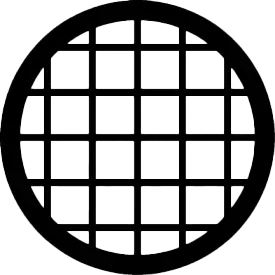
Manufacturer: SPI Supplies — USA
Overview
Standard metal mesh grids are the traditional 3.05 mm diameter support grids used to carry ultrathin sections and support films for transmission electron microscopy. Copper is the overwhelming choice for TEM grids unless there is a strong reason to choose something else, since it is the least expensive and most conductive of the available choices. SPI Supplies also produces the same mesh patterns in nickel, gold, and molybdenum, along with other specialty metals such as titanium, stainless steel, aluminum, beryllium, and carbon-coated nylon for applications where copper is chemically incompatible with the specimen or process. Grids are available in square, hexagonal, folding/double, aperture, slot, parallel bar, handle, and index styles, and in bar patterns ranging from the Regular pattern through the reinforced SPI SuperGrid and fine Slim Bar designs. This range lets a microscopist match grid material and geometry to specimen chemistry, mechanical handling needs, and imaging requirements.
Materials & Construction
Grids are electrodeposited or etched from thin metal sheet into a mesh pattern 3.05 mm in diameter, matching the standard TEM specimen holder. Copper is used by default for its low cost and high electrical and thermal conductivity, while nickel, gold, and molybdenum are substituted when a specimen preparation or staining step is incompatible with copper. Titanium, stainless steel, aluminum, beryllium, and nylon grids serve further specialized roles such as x-ray microanalysis, high-temperature work, or electrochemically inert supports.
Mesh, Bar Patterns & Grid Styles
Mesh sizes span from 50 to 2000 mesh, with common square and hexagonal patterns offered in Regular, SPI SuperGrid, and SPI Slim Bar bar geometries. Folding/double grids, aperture grids with hole sizes from 75 µm to 2000 µm, slot grids, parallel bar grids, and handle (tabbed) grids extend the standard square and hexagonal families for specific mounting and sectioning needs. Index grids add a numbered/lettered square grid pattern, typically at 200 mesh, so that specific specimen features can be relocated between imaging sessions.
Applications
Standard metal mesh grids are the general-purpose substrate for TEM specimen support, carrying either bare ultrathin sections or a support film for particulate, powder, or replica samples. Material selection is driven mainly by chemical compatibility with fixation, staining, and etching reagents, plus the electrical and thermal conductivity required during imaging.
Specifications
| Specification | Standard Metal Mesh Grids |
|---|---|
| Diameter | 3.05 mm standard (3 mm for aperture grids) |
| Mesh sizes | 50 to 2000 mesh |
| Materials | Copper, nickel, gold, molybdenum, titanium, stainless steel, aluminum, beryllium, nylon |
| Bar patterns | Regular, SPI SuperGrid, SPI Slim Bar |
| Grid styles | Square, hexagonal, folding/double, aperture, slot, parallel, handle, index |
| Aperture hole sizes | 75 µm to 2000 µm |
| Packaging | Vials of 10, 15, 25, or 100 grids depending on style |