
Polycarbonate Track-Etch Membranes
SPI-Pore and Nuclepore-type polycarbonate track-etch membranes provide extremely uniform, precisely sized cylindrical pores etched through a thin polycarbonate film, making them a preferred substrate for direct SEM observation of captured particles, fibers, and cells as well as for cell-culture insert applications.
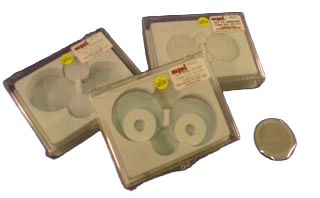
Manufacturer: SPI Supplies — USA
Overview
SPI-Pore and Nuclepore-type polycarbonate track-etch membranes provide extremely uniform, precisely sized cylindrical pores etched through a thin polycarbonate film, making them a preferred substrate for direct SEM observation of captured particles, fibers, and cells as well as for cell-culture insert applications. The standard range spans pore sizes from 0.01 µm up to 20 µm across 13, 25, and 47 mm disc diameters and larger sheet format. Black (low-reflectance), PVP-free (for chemotaxis assays), and grease-coated variants are available for specialized applications.
Standard Track-Etch Membranes
Available in 13, 25, and 47 mm discs and sheet format, these membranes span 0.01 to 20 µm pore sizes. They are used for microfiltration prior to EM preparation and for direct SEM observation of captured particulates or cells.
Specialty Variants
Black polycarbonate membranes reduce background reflectance for fluorescence and particle counting, and PVP-free membranes suit chemotaxis assays. Grease-coated membranes are used for specific sampling protocols requiring a tacky capture surface.
Specifications
| Specification | Polycarbonate Track-Etch Membranes |
|---|---|
| Pore sizes | 0.01 to 20 µm |
| Membrane diameters | 13, 25, 47 mm discs; sheet format also available |
| Material | polycarbonate, track-etched cylindrical pores |
| Variants | standard, black (low-reflectance), PVP-free (chemotaxis), grease-coated |
| Typical use | microfiltration, direct SEM observation of particles/cells/fibers, cell culture inserts |